
 Commercial projects
 My Account





 1-877-947-7769





ADA Showers for Compliant Bathrooms
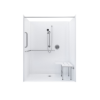
Freedom ADA Transfer Showers and Roll-in Shower Stalls are the professional's choice for code-compliant ADA bathroom projects. Whether you're building new multi-family housing, senior living facilities, or retrofitting existing showers to meet ADA requirements, we have the right solution for your job. Our products are designed to meet various national code requirements, including ADA, FHA-HUD, ANSI A117.1, providing compliance and quality at an affordable price. Read more...
-
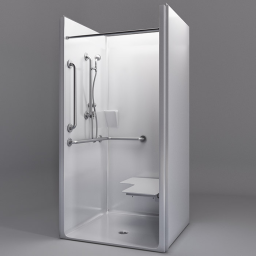
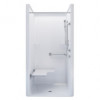
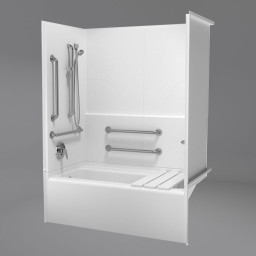
ADA Transfer Showers
Transfer showers with 36" x 36" inside dimensions for ADA compliance.
Learn More -
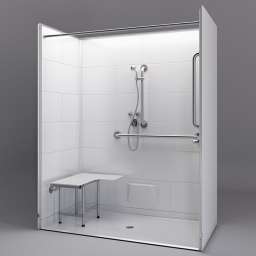
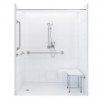
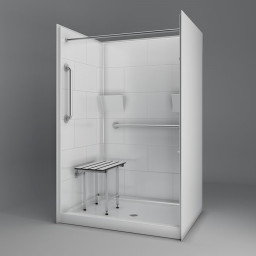
ADA Roll In Showers
Roll in showers with min. 60" x 30" inside dimensions for ADA compliance.
Learn More -
-
-

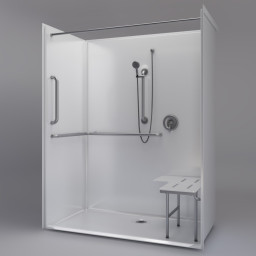
Title 24 & ADA-Compliant Showers
Freedom Showers and Pan for California Title 24 Chapter 11A and/or 11B.
Learn More
WHY 50,000+ PEOPLE TRUST FREEDOM SHOWERS

Easy Installation
Fast installation, saves time and effort

30-Year Warranty
Built to last, covered by a limited lifetime warranty

Made in America
Proudly made in the USA, premium quality

Expert Service
Friendly experts excited to help you plan your project
Breakdown Of An ADA-Compliant Roll-In Shower


| Component | ADA Requirements (Per 2010 ADA Standards) |
| Side Walls | Two walls perpendicular to the shower entry. In transfer showers, grab bars must be provided on the control wall and the back wall. Roll-in showers require grab bars on the back wall and side wall opposite the seat. If there’s no seat, grab bars must be installed on all three walls at a uniform height. |
| Control Wall | The wall where shower controls are installed. Controls must be placed a maximum of 48 inches above the floor, within reach from the seat, and operable with one hand. Transfer showers typically require the controls on the side wall opposite the seat. |
| Back Wall | The wall parallel to the shower entry. In a roll-in shower, the back wall is typically where the controls must be installed. |
| Shower Pan / Base / Floor | The bottom surface of the shower designed for drainage. Slip resistance is an important consideration. |
| Threshold | The entrance edge into the shower. Thresholds must be a maximum of ½ inch if beveled, or max ¼ inch if un-beveled, measured above the finished floor. |
| Seat | Required in transfer-type showers. Seats must be folding or fixed and must safely support a minimum of 250 lbs of force. |
| Grab Bars | Grab bars must be installed in a horizontal position 33–36 inches above the shower floor. |
| Clear Floor Space | A minimum amount of clear space outside the shower entry is required to allow wheelchair approach and maneuvering. |
ADA Compliant Showers Made Simple
If you are researching remodeling or new construction projects‚ especially for bathrooms‚ you will likely come across the terms “ADA compliant” and “Accessible.” It is important to understand the difference before deciding what you need for your project as a shower can be designed with accessibility features without meeting all ADA compliance standards
ADA Vs. Accessible:
- ADA compliance means it follows strict ADA federal standards for public and commercial buildings. The Americans with Disabilities Act (ADA) mandates that businesses and public spaces provide equal access to goods and services for individuals with disabilities.
- "Accessible" might work for your home or certain residential projects, but won't necessarily pass ADA inspection.
Types Of Spaces Where ADA Showers May be Required:
ADA showers are generally required in public-access and commercial buildings where showers are provided. The specific type of shower required will depend on the project and local code, with options including transfer showers or roll-in shower might be required. Some common spaces you might expect ADA showers:
- Hospitality: hotels, motels, campgrounds & other transient lodging
- Education: schools, universities and colleges, student housing
- Healthcare: hospitals, clinics, rehabilitation centers, long-term care and assistive living
- Workplaces & Public Venues: locker rooms, community centers, conference centers, gyms, factories, etc.
Two Types of Showers ADA Showers:
When planning an ADA compliant bathroom, you’ll generally need to install either a Transfer Shower or a Roll-In Shower. Both meet ADA requirements, but the right choice depends on your type of project, local code amendments, the space available, and how the shower will be used.
When to Choose a Transfer vs. Roll-In Shower
ADA Transfer Showers: Best for Small Spaces & Seated Transfers
- Inside dimensions of 36” by 36” fits small spaces
- Transfer showers are intended for users who transfer to a seat
- In most smaller public and commercial projects, a transfer or roll-in shower can be used.
ADA Roll-In Showers: Best for Larger Spaces & Full Wheelchair Access
- Minimum inside dimensions of 60” by 30” allows wheelchairs to enter
- ADA roll-in showers are intended for users who may remain in their wheelchair or require a caregiver
- Hotels and larger facilities, such as a group home, usually require a portion of the rooms to have roll-in showers
Not sure which you need? Our team can help you figure out the right shower for your ADA bathroom layout. Don't hesitate to give our experts a call at 1-877-947-7769 to find the product that best suits your needs
Learn more about ADA Showers

Not sure which shower meets the requirements?
Our experts are here to help.
Call our professionals: 1-877-947-7769
Frequently Asked Questions:
-
The Americans with Disabilities Act (ADA) is a civil rights law that came into being in the USA in 1990 to prohibit discrimination against individuals with disabilities in all areas of public life and to make sure that people with disabilities have the same rights and opportunities as everyone else.
Title III of the ADA is the section regarding Public Accommodations, which sets the minimum standards for accessibility for alterations and new construction of public facilities. Title III is regulated and enforced by the US Department of Justice. The 2010 ADA Standards for Accessible Design is the guideline for meeting the minimum accessibility standards set out in Title III of the ADA.
-
ADA Showers are designed to meet Federal requirements for ADA code compliance in commercial & public buildings. The American with Disabilities Act specifies shower dimensions, seat height, clearances and accessory configurations to accommodate wheelchair users.
Freedom ADA showers are quality products that you can depend on for commercial projects in the USA that must follow the requirements of the 2010 ADA Standards for Accessible Design. The information on ADA showers is found in Chapter 6: Plumbing Elements and Facilities, of the 2010 ADA Standards for Accessible Design.
-
For private apartments and residential homes that don’t need to be ADA compliant, accessible showers are usually a good choice for residential renovations. They share some similarities to ADA showers, like low thresholds, but accessible showers come in more sizes and configurations to meet a range of needs for renovations.
Accessible showers are more likely to be multi-piece units to accommodate a renovation, and you can choose where to install accessories for your individual preferences. Click here for more detail on the difference between ADA and Accessible Showers.
-
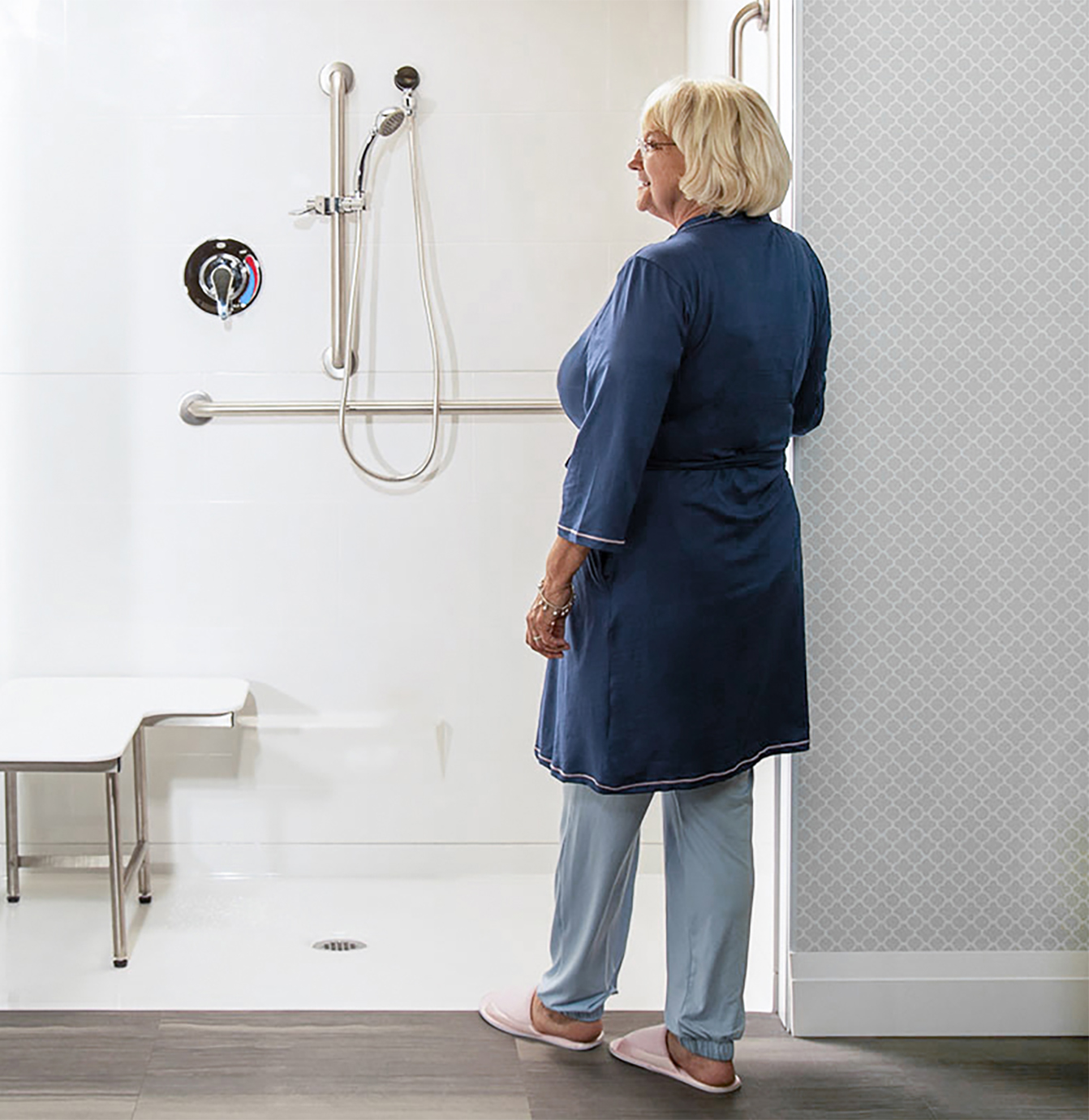
An ADA compliant shower will meet certain design criteria that makes the shower accessible for anyone, including those who use a wheelchair. These criteria include:
- A threshold height no more than ½” high above the finished bathroom floor. Otherwise, the curb must be flush with the finished bathroom floor.
- Grab bars in specified locations.
- Shower seat installed at either 36” x 36” for Transfer Showers or minimum 60” x 30” for Roll in showers and bars as specified.
- Shower head is mounted on a wall bar and is fixed to the wall and spans the width of the shower.
- A proper shower layout that allows for the required minimum 59” long space, so it can be used as a handheld or as a fixed shower head.
- Enough clearance space outside the shower for easy approach by a wheelchair.
-
The ADA is a federal legislation, but state and municipal building requirements may add to ADA requirements (but never require less than the federal ADA). It’s important to check with local authorities as well.
-
There are 3 acceptable styles of showers that are ADA compliant for commercial or public use buildings.
- Transfer Type ADA Shower (36” x 36” inside dimension) Specially designed so that users can transfer onto a shower bench from a wheelchair and rotate under the shower to comply with ADA requirements. ADA Transfer Showers must be exactly 36” x 36” to meet standard.
- Standard Roll-in Type ADA Showers (minimum 60” x 30” inside dimensions) Make maneuvering with a wheelchair easy, with 60” x 30” of accessible shower space. Some jurisdictions require 62” x 32” inside dimension so that users can spin easily.
- Alternate Roll-in Type Shower Compartments, have a minimum inside dimension of 60” x 36”, with a minimum 36” wide entry provided at one end of the long side of the compartment.
-
For private residential homes, you likely don’t need to be ADA compliant, and can just choose an Accessible Shower. However, if you are receiving funding from any organization, they may have requirements in order to be eligible for funding or reimbursement. Check with local permit and inspection offices to make sure you are compliant.
For commercial and public buildings, you will likely need to have a percentage of ADA compliant showers installed. There may be some exceptions, but it’s best to check with local permit and inspection offices before specifying or ordering a shower.
-
The Americans with Disabilities Act (ADA) is a federal law, requiring most businesses and public facilities to provide reasonable access and accommodations for all disabled customers, clients, or members of the public. The ADA does not cover private residential homes.
However, if a business place (of public accommodation) operates out of a private residence, the portions of the residence used for that purpose are subject to ADA regulations. Also, common areas in a residential building would be subject to ADA requirements.
-
An ADA-compliant shower must include:
- Grab bars installed on the back wall and the wall with the controls, 33–36 inches from the floor.
- A folding or fixed seat that supports at least 250 lbs.
- Shower controls and spray unit positioned so they can be reached from the seat.
- Slip-resistant flooring.
-
Yes. You can choose different wall colors, textures, and hardware styles as long as the layout, dimensions, and required features meet ADA specifications.